Choosing the right SPC Wall Panel can shape a room’s appearance, maintenance needs, and installation time. For global buyers in 2026, the challenge is not simply finding an attractive surface. It is comparing product specifications, supplier support, and suitability for the intended space. A panel that performs well in a dry living room may not be the right choice for a humid bathroom or a busy commercial corridor.
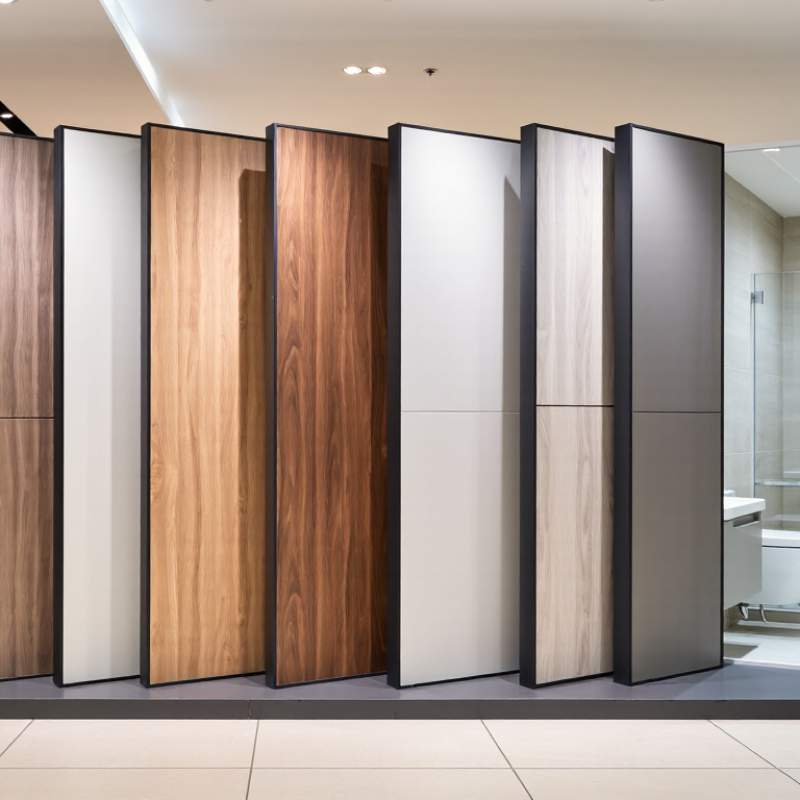
This guide introduces ten options worth evaluating, with practical details in mind. Look closely at panel thickness, surface finish, edge design, installation method, and the manufacturer’s care instructions. A stone-look panel, for example, can create a crisp feature wall, while a lighter wood pattern may suit a narrow hallway. Samples help reveal color and texture under real lighting. They also show how seams and trims appear up close.
Claims need checking. Ask suppliers for current technical documents and confirm whether test reports or certifications match your destination market and project requirements. Availability, warranties, and delivery terms can vary between regions. No shortlist is perfect. Product data may be incomplete, and a polished product photo cannot show every installation challenge. Use the comparisons as a starting point, then verify details directly with the manufacturer or distributor before placing an order.
SPC means stone plastic composite, a rigid material commonly made from PVC resin, mineral filler such as calcium carbonate, stabilizers, and pigments. The exact recipe varies. It is not a universal formula. Manufacturers blend these ingredients, heat the compound, and shape it through extrusion or related forming processes. Cooling sets the panel’s profile. Surface treatments may add a printed pattern, texture, or protective layer.
Picture a warm, dense core moving through a steel die, then cooling into a flat panel. Small changes in mineral content or processing can affect weight, stiffness, and surface quality. That detail is easy to overlook. The VinylPlus 2024 Progress Report records 737,645 tonnes of PVC recycled in Europe during 2023. This figure covers PVC applications broadly, not SPC wall panels specifically. It offers useful context, but does not prove that a particular panel contains recycled material. Buyers should check product-level documentation for composition, thickness, and test results rather than infer performance from the SPC label alone.
10 Best SPC Wall Panels for Global Buyers in 2026
How to Evaluate SPC Wall Panels for Global Projects
A reliable evaluation starts with the wall assembly, not a sample’s surface gloss. Record panel thickness, core density, locking or joint profile, and compatible substrate. Ask for test reports tied to the exact product construction and thickness. For fire performance, check the classification required in the destination market, such as EN 13501-1 in Europe or ASTM E84 in the United States. These results are not interchangeable. Small detail, big consequence.
Check dimensional stability under the temperature and humidity swings expected during shipping and installation. Review installation instructions for expansion gaps, wall flatness, and approved adhesives. Request emissions test results for the finished panel, not just its raw materials; test methods and limits vary by region. Inspect several panels from one production batch for edge consistency, print alignment, and visible core defects. A showroom sample can hide production variation.
Sustainability also deserves evidence, not broad claims. UNEP’s 2024 Global Status Report estimates that buildings and construction account for 32% of global energy use and 34% of energy-related carbon dioxide emissions. This makes product lifespan, maintenance, and replacement waste relevant selection factors. Ask suppliers for material declarations and clear warranty exclusions. Still, one gap remains: paperwork rarely shows how panels behave on an uneven wall. A small project mock-up can reveal joint shadows, awkward cuts around outlets, and adhesive failures before bulk installation.
How to Evaluate SPC Wall Panels for Global Projects: Compare these common panel configurations by application, practical specifications, installation needs, and documentation. “Best” refers to suitability for a particular use case, not a brand ranking.
| Panel Type | Typical Format and Thickness | Surface and Appearance | Best-Fit Application | Installation Considerations | What Buyers Should Verify |
|---|---|---|---|---|---|
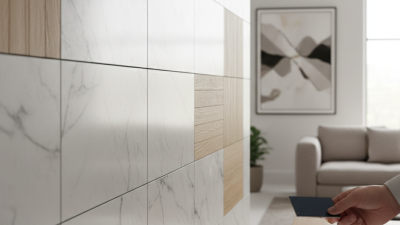
| 1. Large-Format Marble-Look Panel | Common sheet formats are approximately 1,200 × 2,400 mm; thickness often falls around 3–5 mm. | Printed marble or stone pattern, commonly with a smooth or polished-look finish. | Feature walls, hotel interiors, retail spaces, and low-joint decorative wall areas. | Large sheets need careful handling, a flat substrate, accurate cutting, and compatible adhesive or fixing details. | Check sheet tolerances, print consistency between batches, recommended adhesive, joint details, and the tested fire classification for the supplied product. |
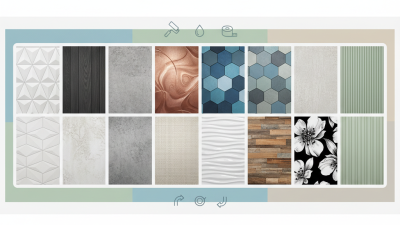
| 2. Stone-Look Textured Panel | Often supplied in large sheets; approximately 4–6 mm is a common thickness range, subject to the product system. | Stone-inspired print with an embossed or lightly textured surface. | Hospitality, residential feature walls, and commercial interiors seeking a tactile finish. | Texture can make seams and cut edges more noticeable; request a full-size sample where appearance matching matters. | Confirm surface-cleaning instructions, texture depth, color variation limits, and whether the panel is intended for the proposed location. |
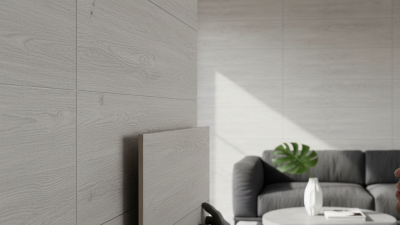
| 3. Wood-Grain Panel | Available as broad sheets or narrower plank-style formats; thickness commonly varies by system, often around 3–6 mm. | Wood-look printed grain, with matte, lightly embossed, or textured options. | Residential interiors, offices, corridors, and feature walls where a timber appearance is desired. | Plan the grain direction and layout before installation; check whether the product uses adhesive, a profile system, or mechanical fixing. | Review pattern repeat, batch shade variation, edge treatment, and any restrictions on exposure to heat or direct sunlight. |
| 4. Tile-Look Panel | May use sheet formats such as approximately 600 × 1,200 mm or larger panels; thickness is commonly around 3–6 mm. | Printed ceramic- or stone-tile appearance, sometimes with simulated grout lines. | Kitchen backsplashes, bathrooms, utility areas, and projects seeking a tile-like visual with fewer panel joints. | Align simulated grout lines carefully. In wet areas, seal joints and penetrations according to the complete installation system. | Confirm wet-area suitability, joint and corner details, substrate requirements, and whether the panel surface tolerates the intended cleaning products. |
| 5. High-Gloss Solid-Color Panel | Frequently offered as large sheets, often approximately 3–5 mm thick. | Reflective, smooth finish in solid colors or simple decorative designs. | Retail displays, reception areas, and interiors where a bright, easy-to-wipe visual surface is preferred. | Glossy surfaces can highlight scratches, uneven substrates, and installation marks; protect sheets during transport and fitting. | Request a physical sample, check scratch and cleaning guidance, and verify the acceptable color and gloss tolerances. |
| 6. Matte Solid-Color Panel | Typically available in sheet formats; thickness often around 3–5 mm, depending on the construction. | Low-sheen, plain-color finish that can suit restrained or contemporary interiors. | Offices, residential rooms, healthcare-adjacent interiors, and commercial spaces with simple color schemes. | Confirm that the chosen fixing method is suitable for the substrate and panel dimensions; use compatible trims at exposed edges. | Check color consistency, surface-cleaning instructions, emissions documentation where required, and project-specific fire test reports. |
| 7. Deep-Embossed Decorative Panel | Often thicker than basic flat sheets; approximately 4–8 mm is a possible range, but profiles vary considerably. | Raised wood, stone, or geometric texture designed to add visible surface relief. | Feature walls, lobbies, showrooms, and selected hospitality interiors. | Relief can affect edge finishing, cleaning, and the flatness needed behind the panel; confirm the installation detail before ordering. | Inspect samples under the project lighting, assess dust-cleaning needs, and verify that the panel’s weight and fixing method suit the wall. |
| 8. Click or Interlocking Panel System | Commonly supplied as narrower boards or modules; system thickness is often around 5–8 mm, including the locking profile. | May imitate wood, stone, or plain finishes; edges are shaped to connect with adjoining panels. | Projects that need a modular installation approach or a more defined panel layout. | Use the specified starter, corner, and finishing profiles. Allow for the system’s movement and expansion requirements. | Confirm the complete profile range, installation instructions, replacement-part availability, and whether the system is approved for the intended wall type. |
| 9. Hygienic Smooth-Surface Panel | Generally supplied in broad sheets; approximately 3–6 mm is a typical range across many interior panel systems. | Smooth, non-porous-looking finish with limited surface relief for easier routine wiping. | Service areas, kitchens, changing areas, and other interiors where frequent surface cleaning is expected. | Panel faces alone do not create a hygienic installation: joints, corners, penetrations, and substrate transitions need suitable detailing. | Check cleaning-chemical compatibility, joint-sealant requirements, applicable hygiene or emissions documentation, and the intended-use limits. |
| 10. SPC Panel with Acoustic Backing | Panel and backing thickness vary by system; the combined build-up is commonly thicker than an unbacked panel. | Decorative SPC face supplied with an attached or specified backing layer. | Interior projects where a backing layer is desired as part of a wall build-up; acoustic results depend on the complete assembly. | Check total thickness, panel weight, fixing compatibility, and whether the backing requires specific joint or edge detailing. | Request test data for the complete wall assembly if sound performance is a requirement; do not infer acoustic ratings from the backing alone. |
Buyer note: Sizes, thicknesses, core composition, and installation systems are product-specific rather than universal standards. Before ordering, obtain current technical data, installation instructions, representative samples, and project-relevant test reports. Fire classification, emissions, wet-area suitability, and acoustic performance must be verified for the exact product and, where applicable, the complete installed assembly. SPC wall panels are generally marketed for interior use; confirm suitability before specifying them for exterior exposure.
For “10 Best SPC Wall Panels for Global Buyers in 2026,” the strongest choices are not simply the thickest or most decorative. Compare core thickness, panel weight, locking accuracy, surface texture, and documented dimensional stability. Ask suppliers for test reports, not just catalog claims. Check fire classification and indoor-emissions documentation against the requirements of the destination market. One detail is easy to miss: a water-resistant panel does not make every joint or wall assembly waterproof.
UNEP’s 2024 Global Status Report for Buildings and Construction estimates that buildings and construction account for 32% of global energy use and 34% of energy-related carbon dioxide emissions. That broad finding makes durability and responsible material choices relevant, though it does not prove that SPC panels reduce a building’s footprint. For buyers, compare recycled-content disclosures, product lifespan evidence, and packaging details where available. Request installation guidance for local humidity and temperature changes, too. Small gaps can matter. A lower-cost panel may look convincing in a sample, yet perform poorly when its locking edges or substrate are inconsistent. No single specification wins everywhere; climate, wall preparation, and installer skill still shape the result.
For global buyers comparing ten SPC wall panel options in 2026, the core and surface deserve close inspection. A rigid stone-polymer core can resist dents, but panel thickness alone does not prove durability. Check the wear layer, locking or joint design, and printed texture under bright side lighting. A sample can reveal raised edges or a pattern that repeats too often. Small details matter.
Certification claims need context. Ask for current test reports and confirm which product, factory, and market they cover. Indoor-air programs and quality-management certificates address different questions; one does not replace the other. Request performance data for moisture exposure, dimensional stability, and cleaning agents relevant to the intended room. Paperwork can look tidy. Scope matters more.
Availability is equally practical. Confirm panel dimensions, carton quantities, minimum orders, and whether matching trims are stocked locally. Ask suppliers for sample dispatch times and a realistic production window, especially before coordinating installers. Freight can affect landed cost, and popular finishes may sell out between quotation and order. Stock can shift. Some comparisons remain imperfect: regional test methods and shipping estimates are not always directly comparable, so buyers should record assumptions alongside each quote.
How to Choose the Right SPC Wall Panel for Your Project
Choosing an SPC wall panel starts with the room, not the color chart. A bathroom, retail space, and busy hallway face different moisture, impact, and cleaning demands. Check the panel’s thickness, surface finish, joint design, and installation method. A thicker panel is not automatically stronger; core quality and support beneath it matter too. Measure wall height and width, then allow for trims, corners, and cutouts. Measure twice.
Tips: Ask for a technical datasheet and recent test reports. Confirm the recommended substrate, adhesive or fixing system, and required expansion gaps. If samples are available, inspect the surface under your project’s actual lighting.
The wall itself deserves attention. Uneven plaster or damp areas can compromise installation, even when the panel is suitable for wet interiors. SPC panels may resist moisture, but seams and edge details still need careful treatment. Compare maintenance instructions and replacement options before ordering. One detail buyers sometimes overlook is delivery format: panel size affects handling, waste, and access through doors. There is no perfect choice for every project, and specifications can be confusing. Request written confirmation when a supplier’s claims are unclear, then compare the documents rather than relying on appearance alone.