
Finding reliable PVC Panel Suppliers worldwide takes more than comparing prices or browsing polished catalogs. A panel may look smooth in a photograph yet arrive with uneven coloring, fragile edges, or dimensions that differ from the sample. Small checks can prevent expensive surprises.
Start by defining the intended use, required thickness, surface finish, and expected order volume. Then ask suppliers for current product specifications, clear photographs, and physical samples from the same production range. Check whether documents explain material composition, tolerances, packaging, and quality-control procedures. Details matter. A neat catalog can still hide a weak process.
Experience also means asking practical questions. Can the supplier explain how panels are checked before packing? Will the company provide batch records or references for similar projects? How quickly does it answer technical questions, and are delivery updates specific? Compare responses, not just promises. If possible, arrange a factory visit or use an independent inspection service before a large order. Verify certificates with the issuing organization when they are important to your project. Requirements can differ by product and destination, so confirm them with qualified local professionals.
No checklist removes every risk. Even careful buyers can overlook a detail, and I would not treat a low quote as proof of poor quality. Instead, weigh sample consistency, communication, production capacity, payment terms, and after-sales support together. A dependable supplier should welcome reasonable questions and give precise answers. That is a stronger starting point for a lasting partnership.
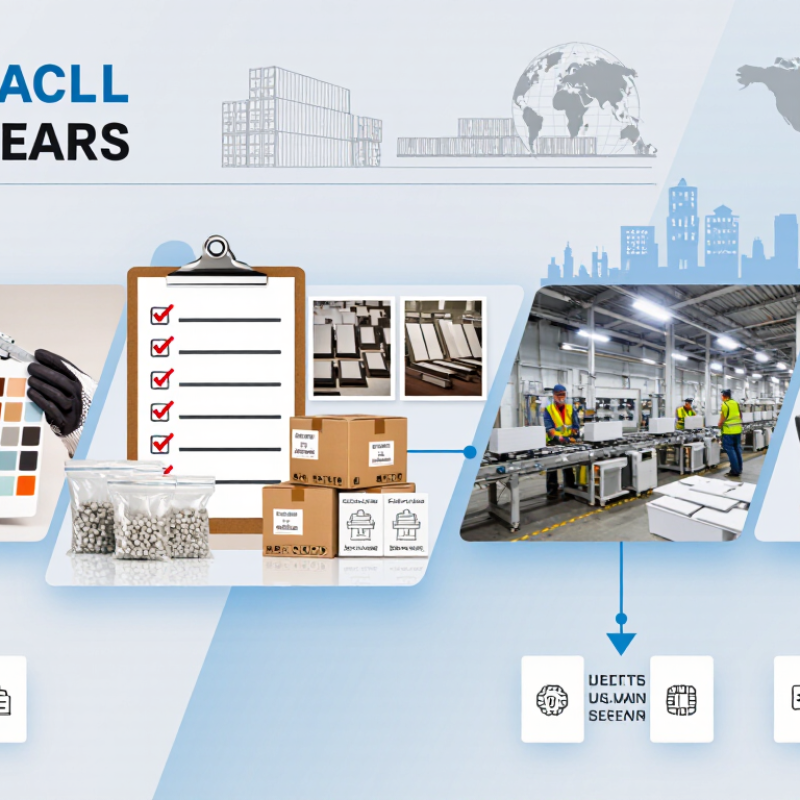
Before contacting suppliers, turn “PVC wall panels” into a measurable brief. State the intended use, panel length and width, nominal thickness, finish, color, and order quantity. Describe the exposure: bathroom humidity, direct sunlight, cleaning chemicals, or impacts from carts. Details matter.
For each key requirement, name a test or tolerance: thickness variation, straightness, impact resistance, color stability, and fire performance. Request reports for the exact panel construction, not a generic PVC sheet. Specify packaging, sample approval, lead time, and acceptable defect levels. A sample is not the shipment. Ask how production batches are checked, and whether tolerances are recorded in writing.
The U.S. EPA’s report Construction and Demolition Debris Generation in the United States, 2018 estimated 600 million tons of such debris that year. That figure makes service life and replacement planning practical sourcing questions. Ask suppliers for installation guidance, care instructions, and evidence supporting any durability claims. Compare answers against your project conditions; I would not assume a thicker panel is automatically the better choice.

When sourcing worldwide, state thickness in millimeters and inches to reduce misunderstandings. The values below are exact unit conversions rounded to three decimal places—not claims about available product sizes. Confirm each supplier’s available thicknesses and manufacturing tolerances.
Global PVC panel supply is concentrated in manufacturing regions with established extrusion, printing, and building-material industries. China offers a broad range of panel types and production capacity. India, Turkey, and parts of Southeast Asia also have active manufacturers serving regional and export markets. European sources may suit buyers seeking closer technical coordination or shorter regional transport routes. Availability varies by panel design, order volume, and destination.
Look beyond a supplier’s trading address. Ask where the panels are extruded, laminated, and packed, then request the factory location and a live production walkthrough. A real production site should show extrusion lines, cooling equipment, surface-finishing stations, and organized sample storage. Request samples from the same product range you plan to order. Check thickness with calipers, inspect printed patterns under daylight, and compare panel weight across samples. Small differences matter. Specifications on a quotation do not prove consistent production. Ask for recent batch records, stated tolerances, packaging details, and references from comparable shipments. A video call can help, but it cannot replace independent inspection for large orders. It is easy to favor the lowest price; freight, breakage, and uneven color may erase that saving. Supplier maps are useful, but they can be incomplete or outdated. Verify details directly, and leave room to revise your shortlist.
A reliable PVC panel supplier should show more than a polished catalogue. Verify business registration, factory address, quality certificates, and certificate scope with the issuing body. Check that the certificate covers the actual production site and relevant processes. Paper is not proof. Request recent audit records, batch inspection sheets, and test results for panel thickness, surface finish, and dimensional stability. A supplier’s experience matters most when it matches your product: ask for project references involving similar panel sizes, specifications, and climates.
Capacity needs evidence, too. Plastics Europe’s Plastics—The Fast Facts 2023 reports global plastics production of 400.3 million tonnes in 2022, illustrating the scale of the supply chain—not any one factory’s output. Ask suppliers for monthly PVC panel output, current order commitments, line count, shift patterns, and typical rejection rates. Compare stated capacity with production logs and a live factory walkthrough. Numbers need context. A factory may list impressive annual capacity yet have little room for your order during peak season. Request a sample run, confirm lead times in writing, and check how the supplier records changes between batches. Even experienced buyers can overlook this: a certificate and a site visit do not guarantee consistent panels. Verify the details against recent orders and test samples independently.
A glossy PVC panel sample can hide uneven thickness, weak edges, or color shifts. Request samples from several production batches, not just one hand-picked piece. Check the cut edges, surface finish, and tongue-and-groove fit under ordinary lighting. Small flaws matter. Compare panel thickness at multiple points with a caliper, and note any strong odor after the sample has aired out.
Ask for test reports that match the panel type and intended use. Relevant checks may include fire performance, impact resistance, dimensional stability, and emissions. Not every test applies to every project. Confirm the testing laboratory, report date, sample description, and method; a certificate alone does not prove that the panels in your order were tested. Where possible, request batch identification and a recent report from an independent laboratory.
Regulatory requirements vary by destination and installation setting. Ask the supplier to identify the standards and documentation relevant to your market, then verify them with the local project team or qualified adviser. Paperwork can look complete while describing a different product. I would not rely on a verbal promise. It is also easy to overfocus on certificates and overlook inconsistent samples; both deserve a careful review before production.
When comparing PVC panel suppliers, put every quote on one specification sheet. Include thickness, usable width, surface finish, color tolerance, packing method, minimum order, and production lead time. A low unit price may hide thinner panels or bulky cartons that increase freight costs. Request a dated sample and written inspection criteria. Keep the awkward details. A quote can still mislead.
Compare shipping terms line by line, not by headline freight cost. Record the Incoterm and named place, loading date, transit estimate, insurance, destination fees, and responsibility for damaged cartons. UNCTAD’s Review of Maritime Transport 2024 reported that route diversions increased global container-ship demand by 12% by mid-2024. Freight estimates can age quickly. The World Bank’s Logistics Performance Index 2023 assesses six areas, including tracking and timeliness. Ask suppliers for booking updates, packing photos, and shipment references.
After-sales support needs measurable commitments. Ask who handles claims, how quickly they respond, and whether replacement panels can match the original batch. Get the process in writing, including evidence required for a damage claim. No checklist catches everything. A polished brochure is not proof of reliable support, and I would still leave room for judgment when comparing suppliers.
Use this checklist to compare supplier quotations on the same basis. Incoterms® rules allocate specific transport-related responsibilities; always confirm the named place, applicable rule, and edition in the sales contract.
| Comparison area | What to compare | Evidence to request or verify | Watch-outs |
|---|---|---|---|
| Product specification | Panel type, dimensions, thickness, surface finish, color, joining system, and intended application. | A signed specification sheet, current product samples, and agreed inspection tolerances. | A price comparison is unreliable if panel dimensions, construction, finish, or included accessories differ. |
| Price basis | Currency, price per panel or square metre, order quantity, packaging, tooling, samples, and any setup charges. | A dated, itemized quotation showing the quantity and specification used to calculate each price. | Check whether packaging, accessories, taxes, bank fees, or other charges are excluded. |
| Minimum order and production time | Minimum order quantity by color or specification, sample availability, production lead time, and order-ready date. | Written confirmation of the MOQ and a schedule stating when production begins and when goods are expected to be ready. | Lead time is not the same as transit time. Confirm whether the quoted period includes customization and inspection. |
| EXW or FCA | The exact named place and which party arranges collection, main carriage, export formalities, and insurance. | A complete Incoterms® reference, such as “FCA [named place], Incoterms® 2020,” plus a separate freight quotation if needed. | EXW places most transport-related responsibilities on the buyer. FCA can be used for any mode of transport; confirm the delivery point and loading arrangements. |
| FOB or CIF | Named port, ocean freight, export clearance, insurance, and destination charges. | A breakdown of origin charges, freight, insurance, and destination costs, with the named port and Incoterms® edition stated. | FOB and CIF are for sea and inland waterway transport. Under CIF, the seller arranges freight and insurance to the named destination port, but risk transfers when goods are on board at the shipment port. |
| DAP or DDP | Delivery address, unloading, import clearance, duties, and taxes. | A delivered-cost quotation identifying the named place and explicitly stating who handles import formalities and pays import duties and taxes. | With DAP, the buyer generally handles import clearance and import duties and taxes. With DDP, the seller takes on those import responsibilities, subject to applicable rules and its ability to act in the destination market. |
| Packaging and shipment protection | Protection against moisture, scratches, edge damage, and movement during transport; package dimensions and gross weight. | Packing details, photographs of packed goods, carton or pallet counts, and shipment measurements for freight planning. | Confirm packaging suitability for the route and handling method rather than assuming standard packaging meets the destination requirements. |
| Quality control and traceability | Inspection timing, agreed acceptance criteria, batch identification, and procedure for non-conforming goods. | Inspection records, production-lot identification, applicable test reports, and a written defect-resolution process. | Check that test reports match the quoted product and specification. Do not treat an unrelated certificate as proof of product performance. |
| Payment and contract terms | Deposit and balance schedule, payment method, quote validity, cancellation terms, and agreed delivery milestones. | A written sales contract or purchase order accepted by both parties, with product, quantity, price, delivery, and inspection terms. | Payment terms vary by supplier and transaction. Verify the beneficiary and payment instructions through an independent channel before sending funds. |
| After-sales support | Warranty scope and duration, response channel, claim documentation, replacement or credit process, and responsibility for related costs. | Written warranty terms, a named contact or support channel, and a clear process for reporting defects with photos, batch details, and order references. | Clarify exclusions, claim deadlines, remedies, and who pays transport costs for replacement goods. |
| Supplier verification | Legal business identity, production or sourcing capability, export experience, and consistency between the quotation and contract. | Business registration details, a live video or independent inspection where appropriate, trade references, and verifiable shipping or quality records. | Treat unusually low pricing, pressure to pay quickly, inconsistent company details, or refusal to provide verifiable documents as reasons for further checks. |
Comparison tip: Normalize each offer to the same product specification, order quantity, destination, delivery term, and inspection requirements before selecting a supplier. Confirm the applicable Incoterms® rule and edition in writing.