
Church seating shapes movement, comfort, and the atmosphere of every gathering. Choosing well requires more than comparing colors or searching for the lowest price. A suitable Church Chair should support long services, weekly events, children’s programs, and occasional community meetings. It must also fit the room’s practical rhythm.
Start with real observations. Measure aisle widths, storage doors, platform access, and the distance between rows. Notice where shoes scrape floors and where coffee often spills. A lightweight chair may help volunteers reset the sanctuary quickly. A stronger frame may matter more in a busy fellowship hall. Upholstery, ventilation, armrests, and seat height can affect comfort during a two-hour service. Small details matter.
No single model suits every congregation. I have seen attractive chairs create narrow aisles and difficult storage. That mistake is easy to repeat when appearance leads the decision. Request samples, test several seats, and ask staff members for honest feedback. Compare frame materials, weight capacity, stacking limits, warranty terms, and cleaning instructions. Reliable suppliers should provide clear specifications and responsive support. Independent reviews can help, but they should not replace hands-on testing. Check relevant safety and fire-performance documentation for your region. Requirements differ.
Think beyond today. A chair that looks economical may cost more after repeated repairs or frequent replacement. Yet the most expensive option is not automatically the wisest. Balance comfort, durability, accessibility, budget, and visual harmony. This guide will help you make a careful choice, with room for questions and second thoughts.
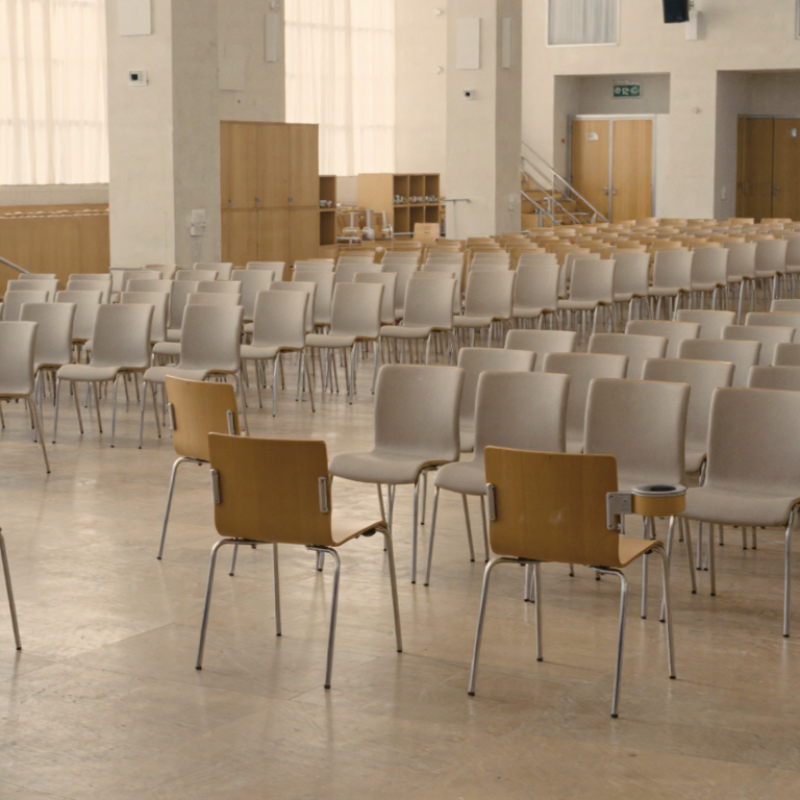
Choosing the best church chair starts with understanding how the room actually works. Faith Communities Today’s 2020 National Survey reported a median worship attendance of about 65 people. However, attendance can change sharply during holidays, weddings, funerals, and community events. Attendance is not capacity. Measure the real room.
Record weekly attendance, peak events, children’s programs, meal services, and storage limits. A sanctuary used only on Sundays needs different chairs from a multipurpose hall.
Check sightlines from the back row, aisle movement, wheelchair spaces, and access to exits. The 2010 ADA Standards for Accessible Design require accessible seating locations in assembly areas, so chair layouts must support more than ordinary comfort.
Try a full sample row before ordering. Sit for forty-five minutes, move between rows, and stack the chairs in the intended storage area. Note floor damage, lifting effort, noise, and cleaning time. A lightweight chair may improve setup, but it may feel less stable during frequent movement.
Our first estimate may be wrong. Review attendance records from the past twelve months, then add realistic peak demand without filling every square foot. NFPA 101, Life Safety Code, also emphasizes safe egress, so local authorities should verify aisle and exit requirements.
Ask harder questions. Will volunteers set up weekly? Will older members need arms? Can the seating adapt when worship becomes a class, meal, or neighborhood meeting?
Choosing a church chair starts with its material, not its color. I have inspected seating in busy worship halls, classrooms, and fellowship rooms. Each setting exposes different weaknesses. Polypropylene chairs resist spills and clean quickly, while fabric chairs feel warmer during long services. Wood adds visual warmth, but it can show scratches and needs steadier humidity control. Metal frames offer dependable support when their welds, joints, and protective finish are properly made.
Construction often matters more than the material label. Check how the back joins the seat, whether screws are accessible, and if the frame twists under pressure. A chair that feels rigid on day one may loosen after repeated stacking. Look for reinforced connection points, balanced weight distribution, and floor glides that do not split easily. In one hall I evaluated, thin glides marked the floor within months. The chairs were attractive, but the maintenance cost was underestimated.
Long-term durability depends on use, storage, and care. Measure daily movement, stacking frequency, cleaning products, and exposure to sunlight before comparing prices. Ask for tested load information and written care guidance. A warranty helps, but it cannot replace practical inspection. Sit in several chairs. Listen for creaks. I would also question highly polished claims; durability tests may not match your congregation’s habits. Choose construction that staff can maintain consistently, even if it looks less impressive in a showroom.
Choosing the best church chair starts with the people who will use it. Comfort should remain steady during a long service, not only during a five-minute showroom test. Sit for at least 30 minutes, if possible. Notice pressure behind your knees, shoulder tension, and lower-back support. A slightly flexible back can help movement, while firm padding may provide better stability. I once preferred a softer seat, but extended sitting exposed its weakness.
Support also depends on proportion. Seat height should allow feet to rest flat, with knees comfortable and balanced. Armrests can help some worshippers stand, but they may restrict movement for others. Check the chair’s weight, grip, and stability before choosing it. A narrow aisle can make a comfortable chair difficult to use. That detail is easy to miss.
Tips: Invite older adults, children, and people with mobility limitations to test sample chairs. Watch how easily they sit, rise, turn, and move between rows. Leave clear paths and avoid placing chairs too close together. Consider smooth surfaces for quick cleaning, but do not sacrifice breathable fabric. Ask an accessibility professional to review the room layout when needs are complex. My own judgment is not enough. A chair may look practical, yet feel tiring after repeated services. Collect honest feedback from ushers and worshippers after several weeks. Their comments may challenge your first decision.
Choosing a church chair requires more than matching fabric to the sanctuary. Safety comes first. The ANSI/BIFMA X5.1 standard tests chair strength, stability, and durability under repeated loads. Ask for current test documentation, not only a weight rating. Inspect exposed screws, sharp edges, loose glides, and connectors during a sample trial. A chair that feels sturdy today may loosen after weekly services.
Flexibility affects every event. Linking chairs can create straight worship rows, classroom groups, or wider access lanes. However, connectors should release without tools and should not create trip points. Storage needs equal attention. Measure the doorway, lift, and storage room before ordering. Record the stacked height and moving weight. NFPA’s Life Safety Code emphasizes maintaining clear means of egress, so stored chairs must never narrow exits or circulation paths. Space planning should also consider accessibility, cleaning routes, and a clear path for emergency movement.
Tips: Mark a full row on the floor with tape. Include aisle width, seat clearance, and rear access. Test five stacked chairs through the narrowest doorway. Ask volunteers to move them. Their feedback may expose problems a specification sheet misses. I would also test noise during setup; quiet handling matters during prayer. No checklist catches every issue. Recheck the layout after a real service. Alongside safety, review the 2023 NFPA fire-loss report when discussing evacuation planning with facility professionals. It recorded about 1.39 million U.S. fires, reinforcing why circulation space deserves careful review.
This practical benchmark compares four key selection factors on a 10-point scale. Higher scores indicate stronger performance for safety, flexibility, storage efficiency, and space management.
Safety reflects stability and load-support considerations; flexibility covers reconfiguration and multipurpose use; storage measures stacking or folding efficiency; and space efficiency considers the chair footprint and aisle planning requirements.
How to Choose the Best Church Chair for Your Needs?
Choosing a church chair requires more than comparing the purchase price. I once helped arrange seating for a small community hall. The cheapest chairs looked acceptable, but their thin padding became uncomfortable after long services. Strong frames, supportive backs, and durable upholstery usually offer better value over several years.
Maintenance also affects the total purchase cost. Look for surfaces that resist stains and can be cleaned with mild soap. Stackable designs reduce storage labor after events. Replaceable glides can protect floors and extend chair life. My early estimates missed these small expenses. That mistake changed how I compare seating.
Tips: Calculate the full cost before ordering. Include delivery, storage equipment, cleaning supplies, repairs, and replacement parts. Ask for fabric specifications and weight limits. Test several chairs for thirty minutes, not just a few seconds. Check whether staff can move a stack safely. A low price is not always economical. Measure the storage room carefully, because a few extra centimeters can create daily frustration. Also, request written care instructions and warranty terms from the supplier. Clear documentation improves purchasing confidence and supports consistent maintenance.
Comparison of common church seating options using typical planning ranges. The best choice depends on service frequency, storage needs, comfort expectations, cleaning requirements, and the available budget.
| Chair Type | Typical Materials | Seat Width | Chair Weight | Stacking / Storage | Comfort Level | Routine Maintenance | Expected Service Life | Typical Unit Price | Estimated 10-Year Ownership Cost | Best Suited For |
|---|---|---|---|---|---|---|---|---|---|---|
| Molded Polypropylene Chair | One-piece or two-piece polypropylene shell with reinforced legs | 17–18 in (43–46 cm) |
8–11 lb (3.6–5.0 kg) |
Usually stackable 8–12 high; easy to move | ★★★☆☆ | Wipe with mild soap and water; inspect leg fasteners periodically | 8–12 years with regular indoor use | $35–$75 | $45–$95 per chair | Large congregations, multipurpose rooms, frequent rearrangement, and value-focused purchases |
| Padded Steel-Frame Stack Chair | Powder-coated steel frame, molded foam, and fabric or vinyl upholstery | 18–19 in (46–48 cm) |
11–15 lb (5.0–6.8 kg) |
Usually stackable 6–10 high; storage cart may be useful | ★★★★☆ | Vacuum fabric; spot-clean spills; tighten hardware and check upholstery seams | 10–15 years with moderate to heavy indoor use | $60–$130 | $80–$175 per chair | Weekly worship services, long meetings, classrooms, and facilities needing a balance of comfort and durability |
| Vinyl Upholstered Steel Chair | Steel frame, high-density foam, and wipe-clean vinyl upholstery | 18–19 in (46–48 cm) |
12–17 lb (5.4–7.7 kg) |
Usually stackable 6–8 high; heavier than plastic chairs | ★★★★☆ | Disinfect with a material-compatible cleaner; avoid abrasive products and excessive moisture | 10–15 years; upholstery may need earlier replacement | $75–$150 | $100–$205 per chair | High-use seating where spill resistance, easy cleaning, and a more formal appearance are important |
| Wood-Frame Upholstered Chair | Solid or engineered wood frame, foam cushion, and fabric or vinyl cover | 18–20 in (46–51 cm) |
13–20 lb (5.9–9.1 kg) |
Often stackable 4–6 high; requires more careful handling | ★★★★★ | Dust regularly; clean upholstery according to fabric type; protect wood from standing moisture | 12–20 years with careful indoor use | $100–$220 | $135–$300 per chair | Traditional sanctuaries, premium interiors, longer services, and spaces prioritizing appearance and comfort |
| Padded Folding Chair | Steel or aluminum folding frame, foam seat, and fabric or vinyl cover | 17–18 in (43–46 cm) |
9–14 lb (4.1–6.4 kg) |
Folds flat; stores efficiently on a rack or cart | ★★★☆☆ | Wipe frame and seat; inspect hinges, glides, and locking mechanisms before use | 7–12 years depending on folding frequency | $45–$110 | $65–$145 per chair | Seasonal events, overflow seating, fellowship halls, and rooms that must change layouts often |
| Heavy-Duty Resin Folding Chair | Impact-resistant resin seat and back with a steel folding frame | 17–19 in (43–48 cm) |
10–15 lb (4.5–6.8 kg) |
Folds flat; suitable for rack or cart storage | ★★★☆☆ | Wash or wipe with mild detergent; dry completely before storage | 8–15 years in indoor or sheltered use | $55–$125 | $75–$165 per chair | Flexible seating, community events, children’s programs, and environments requiring simple cleanup |
Cost assumptions: Estimated 10-year ownership cost includes the initial chair price plus approximately 15%–35% for routine maintenance, replacement glides or hardware, occasional upholstery repair, and normal handling losses. Shipping, taxes, storage carts, installation, and major room renovations are excluded. Prices are indicative planning ranges in U.S. dollars and should be confirmed through current quotations.