Leave Your Message

What Are the Top Drywall Gypsum Board Types in 2026?

In 2026, choosing Drywall Gypsum Board is less about picking a familiar sheet and more about matching the board to the room. A standard panel may suit a dry bedroom, while a bathroom, stairwell, or shared wall can call for different performance. Building scientist Joseph Lstiburek is often quoted: “All buildings leak. The only question is where and how much.” That warning makes moisture planning hard to ignore, even when the board itself looks simple.

This guide compares common types: standard, moisture-resistant, fire-resistant Type X, sound-damping, impact-resistant, and lightweight boards. It looks at where each option can help, what its limits are, and which details deserve a second look. Green-faced board, for example, is not a substitute for a complete waterproofing system. Nor does a fire-rated panel make an entire wall assembly fire-rated by itself. Small distinctions matter.

The right choice depends on the exposure, framing, finish, and installation—not just the label on the bundle. Check current product data and applicable project requirements before specifying a panel. That is practical, but not always convenient. Some product claims sound clearer than the real jobsite conditions. This overview will help readers compare options with care, ask better questions, and spot where a “best” board may not be best for their room.
What Are the Top Drywall Gypsum Board Types in 2026?

How Gypsum Drywall Boards Are Made and Classified

What Are the Top Drywall Gypsum Board Types in 2026?

Gypsum drywall begins with natural or synthetic gypsum, which is ground and heated to remove some of its bound water. The resulting powder is mixed with water and measured additives. This paste is spread between paper facings, shaped into a continuous panel, and allowed to set. Large boards then pass through a dryer before being cut and trimmed. Small details matter.

Boards are classified by more than thickness. Common categories include standard panels, moisture-resistant boards, fire-resistant boards, and sound-control products. Their cores, facings, and additives vary to suit different conditions. For example, moisture-resistant board can help in humid rooms, but it is not waterproof and does not replace suitable waterproofing where required. Fire-resistant panels may use a reinforced core, yet fire performance depends on the tested wall or ceiling assembly—not the panel alone.

Installers also consider panel dimensions, edge shape, and the building’s needs. A tapered edge can make joint finishing easier, while thicker panels may suit particular framing or sound-control requirements. Labels and product data should be checked against the project specification. Classification can feel less clear than the color of a board suggests, and color alone is not a dependable guide. That distinction is easy to miss.

What Are the Main Drywall Gypsum Board Types in 2026?

Drywall gypsum boards differ by core, facing, and intended performance. Standard board is the everyday choice for bedrooms, living rooms, and ceilings with ordinary conditions. It cuts easily with a utility knife and accepts paint after proper joint finishing. Thickness matters: a ceiling may need a stiffer panel to reduce sag, depending on framing and spacing.

Moisture-resistant board has a treated core or facing that handles damp air better than standard board. It is commonly used in bathrooms and laundry areas, but it is not waterproof. Not a shower lining. Wet zones usually need a suitable waterproofing system beneath the finish.

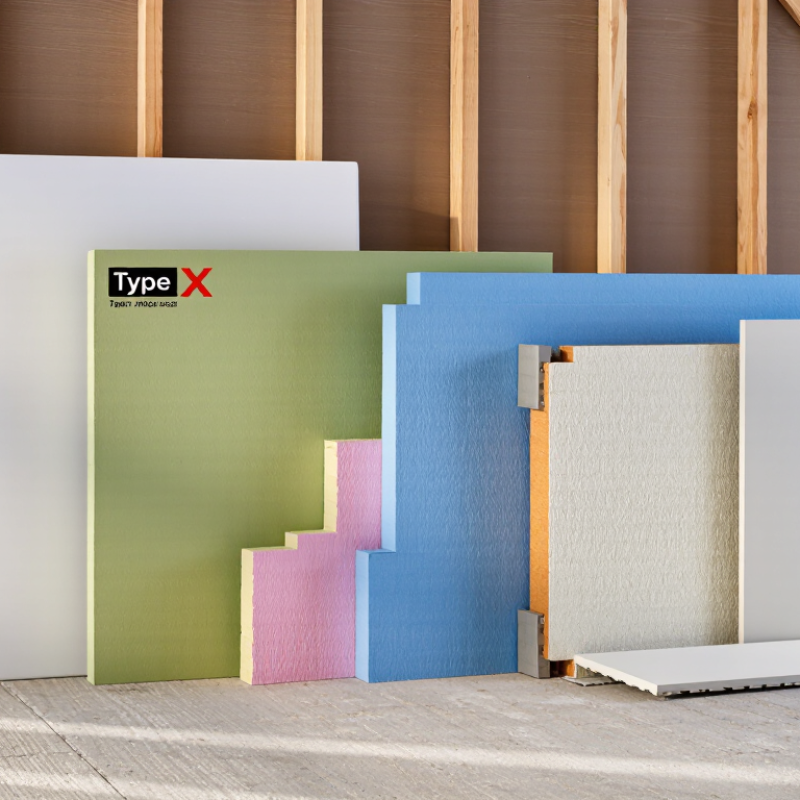
Fire-resistant Type X board contains reinforcing fibers and can help an assembly meet a tested fire rating. The complete wall matters, including fasteners, joints, insulation, and framing.

Sound-dampening boards use denser or specialized cores to reduce sound transfer, though gaps around doors can undermine the result. Abuse-resistant board has a tougher face for hallways, schools, or busy utility rooms where scuffs are common.

Lightweight panels can make overhead installation less tiring, but lighter does not always mean stronger. The labels can be confusing, and board choice alone cannot guarantee performance; check the assembly requirements and room conditions before buying.

How Do Specialty Boards Address Moisture, Fire, and Sound?

Moisture-resistant gypsum board can help in laundry rooms, kitchens, and bathrooms outside direct spray zones. Its treated core and facing slow moisture absorption, but they do not make the panel waterproof. Not waterproof. For showers, use a suitable waterproofing system over an approved substrate. Seal cut edges and follow the installation instructions; small gaps around plumbing can still invite trouble. That detail is easy to miss.

Fire-rated Type X board uses a reinforced gypsum core to maintain integrity longer under fire exposure than standard board. The actual protection depends on the complete tested assembly, including layers, fasteners, framing, and joints. A thicker or labeled panel alone does not establish a fire rating. Acoustic boards may have denser cores or be used with resilient channels and insulation to reduce sound transfer. Performance depends on the whole wall, especially sealed outlets and perimeter gaps. Sound can still travel through floors and adjoining framing. Details matter. Check the project specification and manufacturer’s technical data before choosing a board.

What Are the Top Drywall Gypsum Board Types in 2026? - How Do Specialty Boards Address Moisture, Fire, and Sound?

Board type Typical construction or thickness Moisture performance Fire performance Sound performance Common applications and selection notes
Standard gypsum board Paper-faced gypsum core; commonly 1/2 in. or 5/8 in. Not intended for persistent dampness or direct water exposure. Gypsum contains chemically bound water, but fire resistance depends on the complete tested wall or ceiling assembly. Provides basic sound separation as part of a wall; results depend on framing, insulation, layers, and sealing. General-purpose interior walls and ceilings in dry areas.
Moisture-resistant gypsum board Usually a treated gypsum core with moisture-resistant face and/or backing; commonly 1/2 in. or 5/8 in. Better resistance to incidental moisture than standard board, but it is not waterproof and is not suitable for continuous wet exposure. Fire performance is assembly-specific; moisture resistance alone does not establish a fire rating. No special sound benefit should be assumed unless documented for the installed assembly. Some bathrooms, laundry areas, and other locations with intermittent humidity. Follow local requirements; use an appropriate tile backer in wet or tiled areas where required.
Glass-mat gypsum panel Gypsum core faced with glass-mat surfaces; thickness varies by product and application. Glass-mat facings can improve resistance to moisture-related deterioration, but the panel is not automatically waterproof. Some products are designed for use in specific fire-rated assemblies; verify the tested assembly and panel listing. Sound performance depends on the entire wall or ceiling construction; the facing itself is not a soundproofing solution. Often used as exterior sheathing or in selected high-moisture-risk applications. Confirm that the panel is approved for the intended exposure and finish system.
Type X fire-resistant gypsum board Commonly 5/8 in.; manufactured to meet applicable Type X requirements. Standard Type X board is not necessarily moisture-resistant. Used in tested fire-resistance-rated assemblies. A board type by itself does not provide a specific fire-resistance duration. May contribute to sound separation when used in a suitable assembly, but Type X is not specifically a sound-control designation. Fire-rated partitions, ceilings, and other locations where required by the building design or code. Match the board, framing, fasteners, and installation to the listed assembly.
Type C fire-resistant gypsum board Formulated fire-resistant board; available in thicknesses specified by the product and tested assembly. Moisture performance varies; select a separately rated moisture-resistant product if needed. Designed for use in particular tested fire-resistance-rated assemblies. Performance is assembly-specific and must be verified from the applicable listing. Sound performance is determined by the complete construction, not the Type C designation alone. Specified fire-rated wall or ceiling systems where the approved assembly calls for Type C board.
Sound-damping gypsum board Often a multi-layer or composite panel incorporating a sound-damping layer; thickness and construction vary. Moisture resistance depends on the specific panel and its facing; check product documentation. Do not assume a fire rating unless the exact panel is included in a tested fire-rated assembly. Can help reduce sound transmission when correctly installed in a compatible wall or ceiling system. STC ratings apply to tested assemblies, not to the board alone. Rooms where speech privacy or reduced noise transfer is important, such as offices, bedrooms, or media rooms. Careful sealing and correct detailing are essential.
Abuse-resistant or impact-resistant gypsum board Reinforced or specially formulated panel; thickness and reinforcement vary. Moisture performance varies by product and is not implied by an abuse-resistant designation. Use in a fire-rated assembly only when the exact panel and installation are included in the applicable listing. No particular sound rating is implied; performance depends on the complete assembly. High-traffic or impact-prone interiors such as corridors, schools, healthcare facilities, and service areas. Check the relevant impact or surface-abuse classification.

Selection note: Board performance depends on the exact product, installation, and complete wall or ceiling assembly. Check applicable building codes, product documentation, and tested assembly listings; moisture-resistant boards are not substitutes for waterproofing or a suitable wet-area backer.

Which Board Types Suit Different Rooms and Building Uses?

Standard gypsum board suits bedrooms, living rooms, and dry hallways. It gives walls a smooth, paint-ready surface without unnecessary weight or cost. For bathrooms, laundry rooms, and kitchen areas exposed to occasional moisture, moisture-resistant board is a better choice.

It is not waterproof. Keep it away from direct, prolonged water unless the complete wall system is designed for that exposure.

Fire-resistant Type X board is commonly specified for garage walls, utility rooms, and assemblies requiring a tested fire rating. The rating depends on the full assembly, not just the board.

For shared walls or busy corridors, sound-control or impact-resistant boards may help reduce noise and dents. Ceilings often use thinner, lighter panels, but framing spacing and sag resistance matter.

I have seen room labels mislead buyers; check the actual exposure and installation details. Small distinctions matter.

Tips: Match the board to the room’s moisture, fire, and wear conditions. Confirm local requirements and the tested assembly with a qualified installer. Seal joints carefully. A suitable panel can still perform poorly when installed badly.

What Factors Guide Gypsum Board Selection and Installation?

Selecting drywall starts with the room, not the board label.

Standard gypsum board suits many dry interior walls, while moisture-resistant panels can help in damp areas. They are not waterproof. Moisture changes everything. For showers, follow the specified waterproofing system rather than relying on a panel alone.

Fire-rated and sound-control boards also need the right tested wall assembly; a special panel cannot compensate for missing layers or incorrect framing.

The USGS Mineral Commodity Summaries 2025 estimated U.S. gypsum production at about 22 million metric tons in 2024. That figure describes raw-material supply, not local board availability or building demand.

Check project specifications, local code, framing spacing, wall height, and required fire or acoustic ratings before choosing thickness and edge type. Installation matters just as much. ASTM C840 and GA-216 provide guidance for application and finishing; follow the applicable project requirements.

Use the specified fastener type and spacing, support board edges, and stagger joints where required. Small errors show. A proud screw can tear the paper face, while an unsupported joint may crack after finishing. Ventilation, substrate condition, and careful joint treatment deserve attention, even when the room looks straightforward.