China has a broad manufacturing base for drywall framing products, including the Drywall Light Steel Keel used in interior walls and ceilings. Buyers may compare suppliers by material specifications, production capacity, finish quality, and delivery consistency. These details matter on site. A keel that looks suitable in a catalogue still needs to fit the project’s design and installation requirements.
This guide introduces ways to assess China-based manufacturers without treating a company profile as proof of performance. Review product drawings, dimensional tolerances, coating information, and available quality records. Ask how the supplier handles samples, custom sizes, and changes between batches. Clear answers are useful; vague promises deserve follow-up. No shortlist is perfect. Factory visits, independent inspections, or trial orders may provide further evidence, though each has limits. Even careful sourcing has blind spots.
The manufacturers discussed in this article should be considered through practical criteria rather than unsupported rankings. A lower quotation may not reflect packaging, freight, or product consistency. A polished website may reveal little about routine production controls. Compare the evidence available, confirm requirements in writing, and leave room for questions. That approach can help contractors, distributors, and project teams identify a supplier suited to their needs. It cannot remove every risk, and that is worth remembering.
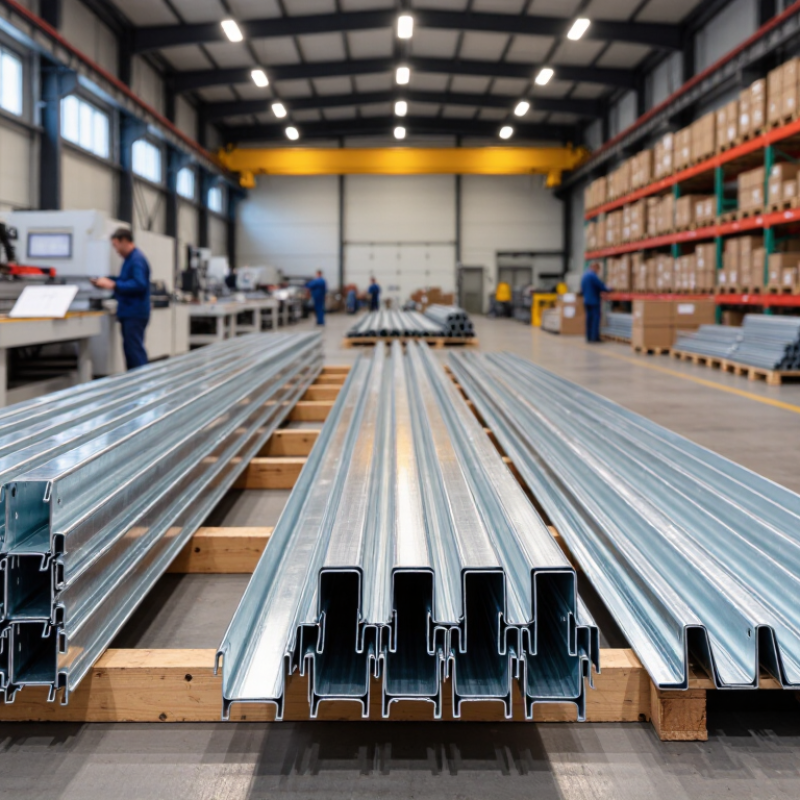
A drywall light steel keel is a cold-formed steel framing member that supports gypsum boards. Vertical studs fit into horizontal tracks to form partitions; ceiling channels carry boards overhead. Their thin profiles are light to handle, yet they create a straight fixing surface when installed accurately. World Steel Association’s steel-use overview reports that buildings and infrastructure account for roughly half of global steel demand, reflecting steel’s broad role in construction. That figure covers far more than interior framing, but it gives useful industry context.
On site, installers mark the floor and ceiling, secure the tracks, then set studs at the spacing specified for the board system and project. Screws bite into the metal flanges; electrical services pass through factory-punched openings when available. Small details matter. A twisted track or poorly aligned stud can leave visible ridges under a smooth painted wall. Keels are not automatically structural: ordinary partition framing should not be treated as load-bearing without design approval. The steel’s coating, member thickness, span, and moisture exposure also affect performance. A level and tape still do essential work. Even careful crews can find uneven slabs, so some adjustment is usually needed.
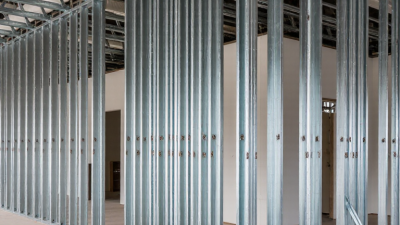
China’s drywall light steel keel industry serves residential, commercial, and renovation projects. Manufacturers commonly shape galvanized steel coils through roll-forming, creating profiles for wall studs, tracks, and ceiling frames. Production consistency matters. A clean, even profile is easier to align on site, where small bends can slow installation.
Buyers often compare steel thickness, coating quality, dimensional tolerance, and packaging. Ask for product specifications and inspect samples rather than relying on appearance alone. Check the edges for burrs, the profile for twisting, and the coating for visible gaps. Small differences matter. Still, a sample cannot represent every production batch, so clear inspection records are useful.
The market includes factories with different equipment, capacity, and quality-control routines. Some can handle custom lengths or profile dimensions, but confirm requirements before placing an order. Transport deserves attention too: bundles need secure strapping and dry storage to reduce damage and surface staining. Not every issue is obvious. Installation conditions, local project requirements, and the skill of the crew also affect performance. A dependable supplier relationship starts with specific questions, realistic lead times, and agreed checks at delivery.
Light steel keels begin as galvanized steel coils. Operators inspect coil certificates, then slit the strip to the required width. Roll-forming stations shape it through successive bends; rollers punch service holes, and a cutoff saw sets each length. Small errors matter. A slight roller shift can change flange width or leave a sharp edge. The World Steel Association’s World Steel in Figures 2024 reports 1,892.2 million tonnes of crude steel production worldwide in 2023. That figure shows the scale of steel supply, not the quality of any individual keel, so coil traceability remains essential.
Quality checks compare base-metal thickness, web and flange dimensions, straightness, and hole position with the product specification. ASTM C645 covers nonstructural steel framing members, while ASTM A1003/A1003M covers steel sheet for cold-formed framing. Depending on the inspection plan, technicians use micrometers, profile gauges, coating checks, and sampled mechanical tests. They should record results by coil and production batch. A neat-looking section can still conceal thin material or weak coating. Fast lines can drift between checks; that risk deserves more attention than polished sample pieces.
Evaluating China’s leading drywall light steel keel manufacturers requires more than comparing unit prices. The World Steel Association’s World Steel in Figures 2025 reports China produced 1,005.1 million tonnes of crude steel in 2024. That scale shows strong industrial capacity, not consistent keel quality. Ask whether the factory controls strip thickness, zinc coating, profile dimensions, and batch traceability. Small variations matter. A channel that twists under hand pressure can complicate ceiling alignment and weaken connections. Request current test records and confirm they identify the material batch, not just the product type.
Assess production evidence alongside finished-product performance. Ask for load-test results for the specified framing assembly, since a profile alone does not establish system capacity. Check whether samples match the drawings and quoted thickness; measure several points with a calibrated gauge. Review quality procedures, inspection frequency, and corrective-action records. These details reveal more than polished certificates. A factory may have modern roll-forming lines yet still miss issues during packing or shipment. I would also inspect a recent delivery, if practical. Paperwork helps, but it can be incomplete.
Use this framework to compare manufacturers using current, product-specific documents and samples. The weightings are suggested evaluation priorities, not ratings or verified performance claims about any particular supplier. Score each criterion from 1 (insufficient evidence) to 5 (strong, independently verifiable evidence).
| Evaluation criterion | What to verify | Evidence and evaluation guide | Suggested weight | Score |
|---|---|---|---|---|
| Product standards and scope | Whether the offered profiles and intended applications are covered by applicable product and installation requirements. | Request the exact standard editions and product scope stated in technical documents. Relevant references may include ASTM C645 for nonstructural steel framing members, ASTM C754 for installation of steel framing members, and EN 14195 for metal framing components for gypsum plasterboard systems. Confirm applicability with the project specification. | 15% | |
| Material and dimensions | Steel grade, base-metal thickness, profile dimensions, tolerances, and consistency between quotation, drawings, and supplied goods. | Compare approved drawings and product data with measured samples and batch inspection records. Confirm whether stated thickness refers to base steel or includes any coating; do not rely on an unqualified thickness figure. | 15% | |
| Mechanical performance | Whether the profile system meets project requirements for strength, stiffness, and the specified wall or ceiling assembly. | Review test reports or calculations for the relevant profile, span, spacing, fixing method, and assembly configuration. Check that the tested configuration matches the proposed use; a profile name alone does not establish system performance. | 15% | |
| Corrosion protection | Coating type and mass or thickness, corrosion-test method, and suitability for the installation environment. | Request coating specifications, test methods, and batch records. Compare them with project and environmental requirements. Confirm the test specimen and acceptance criteria before treating a corrosion test result as evidence of suitability. | 10% | |
| Quality management and inspection | Documented controls for incoming steel, roll forming, dimensional checks, nonconforming products, and final inspection. | Review current quality-management certificates and their scope, alongside actual inspection plans and sample records. ISO 9001 concerns quality-management systems; certification by itself does not certify every product or shipment. | 15% | |
| Traceability and documentation | Ability to link delivered bundles to production batches, material records, inspection results, and agreed specifications. | Ask for an anonymized example of a batch record and check whether labels, packing lists, and inspection documents use consistent product codes and lot references. | 10% | |
| Production and delivery capability | Whether stated production capacity, tooling, order quantities, and lead times can support the required schedule. | Verify capacity using equipment lists, production schedules, sample lead-time records, and a written delivery plan. Distinguish demonstrated output from maximum or promotional capacity figures. | 10% | |
| Export and packaging readiness | Packaging protection, shipment marking, export documentation, and ability to meet destination-market requirements. | Review sample packing lists, bundle labels, packaging specifications, and shipping documents. Confirm document requirements with the buyer, carrier, and relevant authorities for the destination. | 5% | |
| Technical support and change control | Response capability for drawings, samples, specification questions, and notification of product or material changes. | Assess response times during the quotation process and request written procedures for approval of deviations, drawing revisions, and changes affecting product conformity. | 5% |
Chinese drywall light steel keel manufacturers typically supply wall studs and tracks, ceiling channels, furring sections, corner beads, and connecting accessories. Product ranges vary by project: a residential partition may need slim C-studs, while a suspended ceiling often uses main channels, cross channels, and adjustable hangers. Coating, thickness, profile shape, and cut length are common customization points. Check samples and drawings together; a neat profile alone does not guarantee reliable installation.
Upstream supply is substantial. World Steel Association’s World Steel in Figures 2024 reports that China produced 1,019.1 million tonnes of crude steel in 2023. This indicates a large steelmaking base, not the output or quality of finished keels. Buyers should request measurable evidence, including base-metal thickness, coating mass, dimensional tolerances, and load-test records. Ask whether test results match the supplied batch. Small differences matter. A channel that looks straight on a sample can still twist after transport, and packaging details deserve more attention than they often receive. Some specifications remain project-dependent, so compare actual section drawings rather than relying only on product labels.