Fire-Resistant PVC Wall Panels are drawing attention from buyers who need practical finishes and verifiable fire-performance evidence. The stakes are real. NFPA’s Home Structure Fires report, covering 2018–2022, estimates an annual average of 358,500 U.S. home structure fires and 2,720 civilian deaths. These figures describe residential fires overall, not fires caused by wall panels. That distinction matters.
“Fire-resistant” does not mean fireproof. A panel’s behavior can depend on its formulation, thickness, mounting method, joints, and the materials behind it. Fire scientist Dr. Guillermo Rein’s research offers a useful principle: evaluate the tested assembly, not the product name alone. That is a paraphrase, not a direct quotation. Buyers should request current test reports and confirm which standard and configuration were tested. ASTM E84 and EN 13501-1 are examples of systems used in different markets; their results are not interchangeable.
Look beyond a brochure. Ask for the panel’s declared classification, installation details, and evidence that the supplied product matches the tested sample. A neat surface is not proof of fire performance. Nor is a “fire-resistant” label enough. For global sourcing teams, the 2026 comparison should weigh test evidence, traceability, and installation requirements alongside price, appearance, and cleaning needs. Some product data may still be incomplete. That deserves scrutiny, not guesswork.
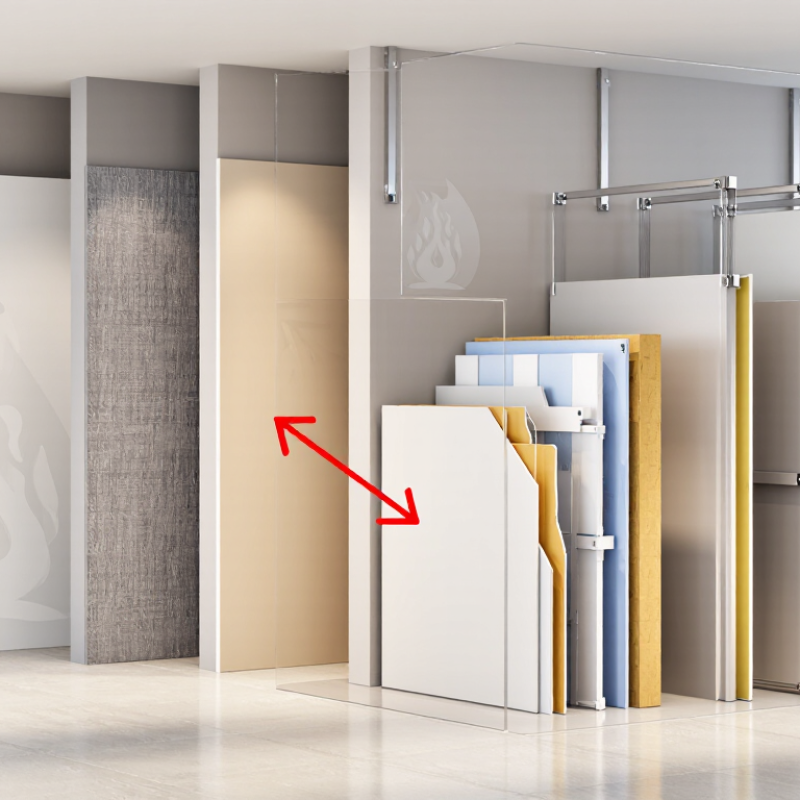
Fire-resistant PVC wall panels are rigid sheets made from PVC resin, stabilizers, pigments, and sometimes mineral fillers or flame-retardant additives. They provide a washable wall surface in places such as corridors, kitchens, and utility rooms. When exposed to heat, additives may slow ignition or flame spread, depending on the formulation. Not fireproof. PVC can soften and decompose; burning material may produce dense smoke and hydrogen chloride gas. Seams matter, too: open joints and poorly fitted edges can affect how a wall assembly performs.
ASTM E84 measures surface flame spread and smoke development, but it does not recreate a full room fire. Under commonly used building-code classifications, Class A corresponds to a flame-spread index of 0–25 and a smoke-developed index of 450 or less. NFPA’s Fire Loss in the United States During 2023 estimated 1,389,000 fires and US$23.2 billion in direct property damage. Those figures cover fires generally, not incidents involving PVC panels specifically. Buyers should check independent test reports for the exact panel, backing, and installation method. A label alone can leave important questions unanswered.
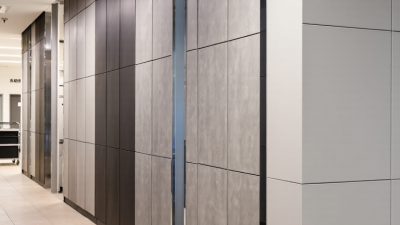
What Fire-Resistant PVC Wall Panels Are and How They Work
The chart shows common fire-resistance rating durations used for tested wall assemblies. These ratings describe how long a complete assembly can meet specified fire-test performance criteria; they are not ratings for a PVC panel on its own. A panel’s reaction-to-fire classification is a separate measure, so buyers should check test reports for the exact panel and installation system.
Fire-resistant PVC wall panels rely on more than PVC resin. Mineral fillers, stabilizers, pigments, and panel thickness affect flame spread and smoke behavior. A supplier’s test report should identify the exact panel build, including its core, finish, and mounting method. ASTM E84 reports flame-spread and smoke-developed indices; EN 13501-1 classifies products using European test methods. These results are not interchangeable. A panel’s rating can change when installed over a different substrate or with different adhesives and joints.
The NFPA report Fire Loss in the United States During 2023 estimated 1,389,000 fires and US$23.2 billion in property damage. That scale makes careful specification worthwhile, though a panel rating alone cannot predict whole-building fire performance. For global projects, request reports from an accredited laboratory and check that the tested configuration matches the intended installation. Also verify the market’s required classification and edition of the relevant standard. Paperwork can look reassuring. It may still describe a different assembly.
Tip: Compare the test report with the actual panel, backing, adhesive, and joint details. Ask for smoke data as well as flame-spread results. If a certificate is vague about thickness or installation, pause and ask for clarification; that small uncertainty is easy to overlook.
PVC wall panels suit different building needs, but their construction matters. Hollow panels are lightweight and practical for dry rooms, retail back walls, and quick refurbishments. Their internal ribs reduce weight, though poorly supported edges may flex. Solid-core panels feel firmer and can better withstand knocks in corridors or busy service areas. Decorative laminated panels offer more finishes for offices and hospitality spaces, while smooth, low-joint panels are easier to wipe in kitchens and washrooms.
For projects with stricter fire-performance needs, specify panels tested as part of the intended wall assembly. A fire-retardant formulation does not make PVC fireproof. Results can vary with panel thickness, joints, backing, and installation details. Ask suppliers for current test reports from qualified laboratories, then check that the tested configuration matches the project. A sample may look convincing, yet reveal little about real performance. That distinction is easy to overlook.
Tips: Match panel type to moisture, impact, and cleaning demands. Inspect cut edges and joint profiles before ordering. Confirm the substrate and fixing method with the installer, and retain product documentation for future checks.
For global buyers, comparing fire-resistant PVC wall panels starts with the complete wall assembly, not a product label. Review the panel’s fire-test report, including the tested thickness, surface finish, substrate, and installation method. A result for one configuration may not apply to another. Ask for current documents from an accredited testing or certification body, and confirm that the named product matches the quotation. Small details matter.
Compare performance beyond fire classification. Check impact resistance, moisture behavior, cleaning requirements, and dimensional stability under expected indoor conditions. A sample can reveal surface texture and edge quality, but it cannot replace test data. Total cost should include freight, protective packaging, installation accessories, cutting waste, and replacement needs. Ask for a delivered cost per usable square meter, not just a factory price. Installation can change the calculation: uneven walls or complex joints may increase labor. The cheapest quote can still be suitable, but only when specifications and documentation align. They may not. Check certificates against the destination market’s requirements, since accepted schemes differ. Keep the report, product specification, and purchase order together for review during procurement.
| Comparison dimension | What buyers should compare | Relevant benchmark or standard | Evidence to request | Practical buying note |
|---|---|---|---|---|
| Reaction to fire | How readily the exposed panel surface contributes to flame spread and smoke development. | ASTM E84 / UL 723 reports flame-spread and smoke-developed indices. Under ASTM E84, Class A corresponds to FSI 0–25 and SDI 0–450. EN 13501-1 uses a separate classification system; for example, B-s1,d0 is one possible declared class. | A current test report or classification report identifying the tested panel, thickness, finish, mounting method, substrate, and applicable classification. | ASTM Class A and EN classes are not directly interchangeable. ASTM E84 is a surface-burning test, not proof that a wall assembly is fire-resistance rated. |
| Fire resistance of the wall assembly | Whether the complete wall construction maintains its required performance for a stated duration. | Examples of assembly-level test methods include ASTM E119 / UL 263 and EN 1364-1 for non-loadbearing walls. | The assembly test or listing, including framing, board layers, panel attachment, joints, penetrations, and permitted installation details. | Do not treat a panel’s surface-burning result as a fire-resistance rating. Ratings apply to the tested or approved construction, not automatically to a panel alone. |
| Smoke and fire behaviour | Smoke classification, test conditions, and how the material behaves when exposed to heat. | ASTM E84 reports an SDI; EN 13501-1 includes smoke subclasses such as s1, s2, or s3. These are different reporting systems. | The full report and its test scope, rather than a standalone “low smoke” claim. | An E84 smoke index is not a toxic-gas assessment. PVC can soften or melt under heat; evaluate the product and installation for the intended occupancy and local code. |
| Panel construction and specification | Panel thickness, mass per area, core or formulation description, surface finish, edge profile, and dimensional tolerances. | Compare declared technical data against the project specification; there is no single universal thickness or construction that defines a fire-resistant PVC panel. | Product data sheet, drawings, tolerances, and confirmation that the supplied configuration matches the fire-test specimen. | A change in thickness, finish, backing, or installation can affect test applicability. Confirm allowable variations in writing. |
| Moisture and cleaning suitability | Water exposure, joint sealing, cleaning agents, stain resistance, and maintenance requirements for the intended room. | Use the supplier’s declared test methods and care instructions; confirm compliance with project hygiene or wet-area requirements where applicable. | Cleaning and maintenance guide, chemical compatibility information, and details for joints, trims, and penetrations. | Water resistance of a panel does not establish the water resistance of the complete wall, especially at seams and service openings. |
| Cost and delivered value | Compare total installed cost per usable square metre, not only the quoted panel price. | There is no reliable universal price benchmark: cost varies by market, order quantity, specification, freight, duties, and installation conditions. | Itemised quotation covering panels, trims, adhesives or fasteners, wastage, packaging, freight, duties, testing documents, and installation. | Compare like-for-like thickness, finish, fire-test scope, order quantity, delivery terms, and warranty before judging price differences. |
| Certification and documentation | Whether documents are valid for the destination market, product configuration, and project use. | Applicable requirements depend on local building codes and the project. A test report, product certificate, and assembly listing serve different purposes. | Check report number, issuing laboratory, test date, product identification, scope, classification, and any stated limitations or renewal conditions. | Verify documents with the issuing laboratory or certification body where necessary. A certificate for a similar product is not automatically valid for the offered panel. |
| Indoor emissions and project requirements | VOC emissions and any indoor-air, sustainability, or material disclosure requirements in the project specification. | CDPH Standard Method v1.2-2017 is one example of an emissions-testing method referenced by some projects; confirm the required method and edition locally. | Emissions test report for the relevant product, plus any requested environmental product declaration or material disclosure. | Indoor-emissions evidence is separate from fire-performance evidence. Request both when the project requires both. |
Buyer reminder: Fire classifications apply only within the stated test scope and installation conditions. Confirm the applicable local code and obtain project-specific approval before specifying or installing panels.
Selecting fire-resistant PVC wall panels starts with the project specification, not appearance alone. Check the panel’s test reports and fire classification against local requirements, and confirm whether the rating applies to the panel alone or a complete wall assembly. Smoke performance, thickness, surface finish, and cleaning needs also matter. Ask for current technical documents before ordering; labels can be confusing across markets. No panel fits every site.
Before installation, inspect the substrate for moisture, dust, and uneven areas. Let panels adjust to the room conditions as directed by the supplier, especially after long-distance shipping. Use compatible adhesives or fixing systems, and follow the specified joint spacing. A small gap can prevent buckling as temperatures change. Keep cut edges neat and wear suitable eye and respiratory protection when cutting. Fire performance may depend on the whole assembly, including the substrate and fixings, so an improvised installation can undermine the intended result.
For maintenance, wipe surfaces with a soft cloth and a mild, approved cleaner. Avoid abrasive pads that can scratch the finish. Check seams, corners, and areas near doors for loose edges or impact damage during routine inspections. Replace damaged sections using compatible materials. Even good panels can age unevenly; sunlight and cleaning habits are not always predictable. Keep product records and installation details accessible for future repairs.